

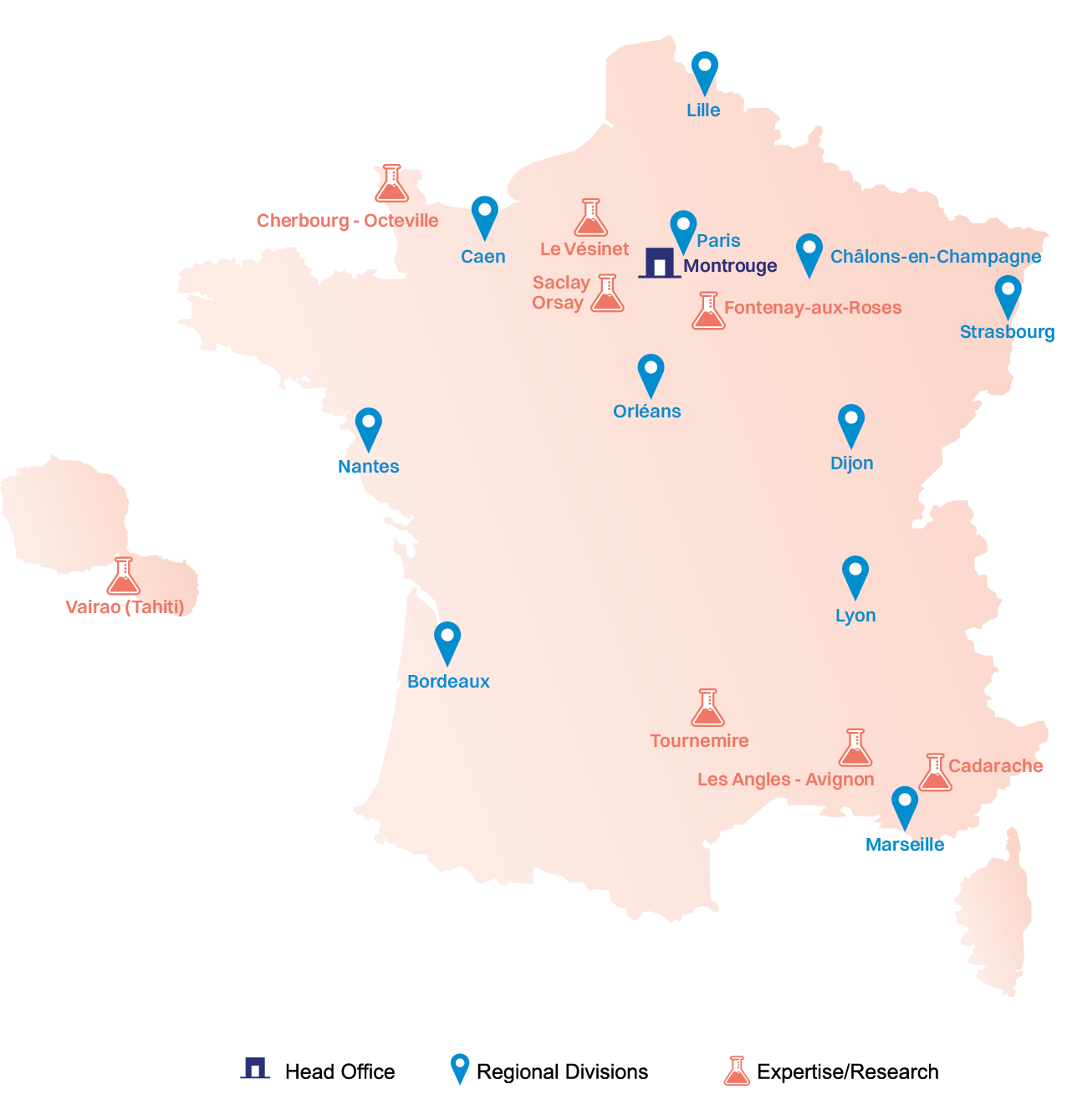
French Authority for Nuclear Safety and Radiation Protection (ASNR)

The French Authority for Nuclear Safety and Radiation Protection (ASNR) oversees civil nuclear activities in France on behalf of the French State. It also carries out research, expert assessments, training, and public information in the fields of nuclear safety and radiation protection.
Direct access

  • Recruitment and job offers

    ASNR recruits in its various areas of activity: expertise, research, oversight, and regulation.

  • Healthcare professionals

    This section contains tools, forms, and documents for healthcare professionals using ionizing radiation.

  • Press

    This area contains all information intended for the press. ASNR is available to respond to requests for information from the media.

Creation of ASNR

ASNR is the result of the merger of ASN and IRSN.

Know more

International activities

The Nuclear Safety and Radiation Protection Authority (ASNR) is a global leader in nuclear safety and radiation protection, committed to ensuring the highest standards of safety in nuclear facilities worldwide. ASNR is also committed to efficiency, ensuring that its actions are both impactful and proportionate to the challenges of nuclear safety and radiological protection. Our mandate includes control and overseeing of civil nuclear activities and radiological protection in France and promotion of French practices and approaches in Europe and at the international level. ASNR also provides expertise, research and training in these fields. Finally, it plays a key role in promoting transparency in nuclear matters and regularly reports on its activities to the French Parliament.
International activities

Report on the state of nuclear safety and radiation protection in France in 2025

Abstracts-Annual-Report-ASNR-2025

The French Authority for Nuclear Safety and Radiation Protection presents its Report on the state of nuclear safety and radiation protection in France in 2025.

This Report is required by Article L. 592-31 of the Environment Code. It was submitted to the President of the Republic, the Prime Minister and the Presidents of the Senate and the National Assembly and transmitted to the Parliamentary Office for the Evaluation of Scientific and Technological Choices, pursuant to the above mentioned Article.


Our four main operational roles