Pierre-Marie Abadie chairs the 8th ENSREG Conference on Nuclear Safety
The 8th ENSREG Conference, chaired by Pierre-Marie Abadie, confirmed the unprecedented challenges posed by the new nuclear landscape and the commitment of regulatory authorities to safety, a key factor in overall performance.
On 16 and 17 June 2026, Pierre-Marie Abadie, ASNR President, chaired the 8th Nuclear Safety Conference co-organised by ASNR in Brussels (Belgium) as part of ENSREG, the European Nuclear Safety Regulators Group.
The general theme of the conference, "Regulating nuclear safety in a rapidly changing and challenging environment", was an opportunity for representatives of nuclear safety authorities, research and technical support organisations, international organisations, the European Commission, industry, civil society, and non-governmental organisations to address the challenges and opportunities of the current nuclear safety and radiation protection context.
The conference brought together more than 230 people, representing all stakeholders in the primarily European nuclear safety ecosystem. It overwhelmingly confirmed the desire of all to intensify the collective dialogue and the leading role of Europe in current debates. Strong strategic convergences among safety authorities on the main topical issues were expressed, convergences made possible by the existence of long-standing technical cooperation between stakeholders, in particular within the framework of the WENRA, ENSREG, HERCA, and ETSON networks.
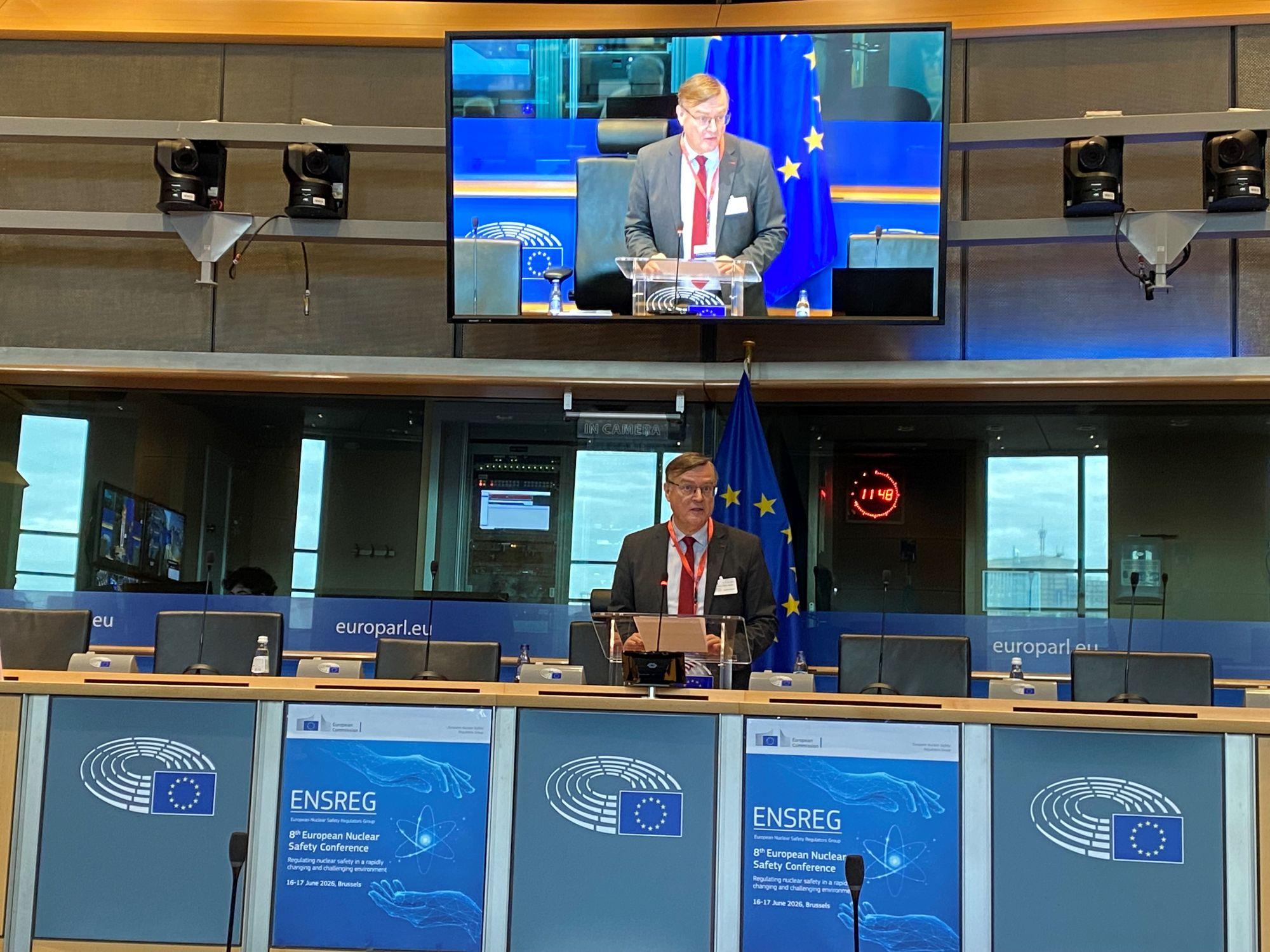
Pierre-Marie Abadie, Chairman of ASNR, opens the 8th Conference on Nuclear Safety, co-organised by ASNR and ENSREG.
In this context of nuclear resurgence, safety remains the priority
In his introduction, Pierre-Marie Abadie noted that the nuclear sector, firmly grounded in the fundamentals of safety and radiation protection built over the long term, had now entered a new cycle after a decade marked by the reinforcement of nuclear safety following the Fukushima accident. He stated that while safety remains the top priority, safety authorities now have to respond to new challenges. His introductory speech touched on the revival of nuclear power in several countries, motivated by decarbonisation and energy security, accompanied by projects for new reactors and to extend the life of existing facilities. At the same time, he reported on the emergence of innovative technologies, such as small modular reactors (SMR), artificial intelligence, and digital tools which create both opportunities and new challenges for safety. Pierre-Marie Abadie considers that the safety authorities should strengthen their skills, their agility, and their cooperation with all actors in the nuclear sector, while preserving their independence. He also reaffirmed that, in this context, safety and radiation protection were the essential foundation for sustainable, credible, and socially accepted nuclear development.
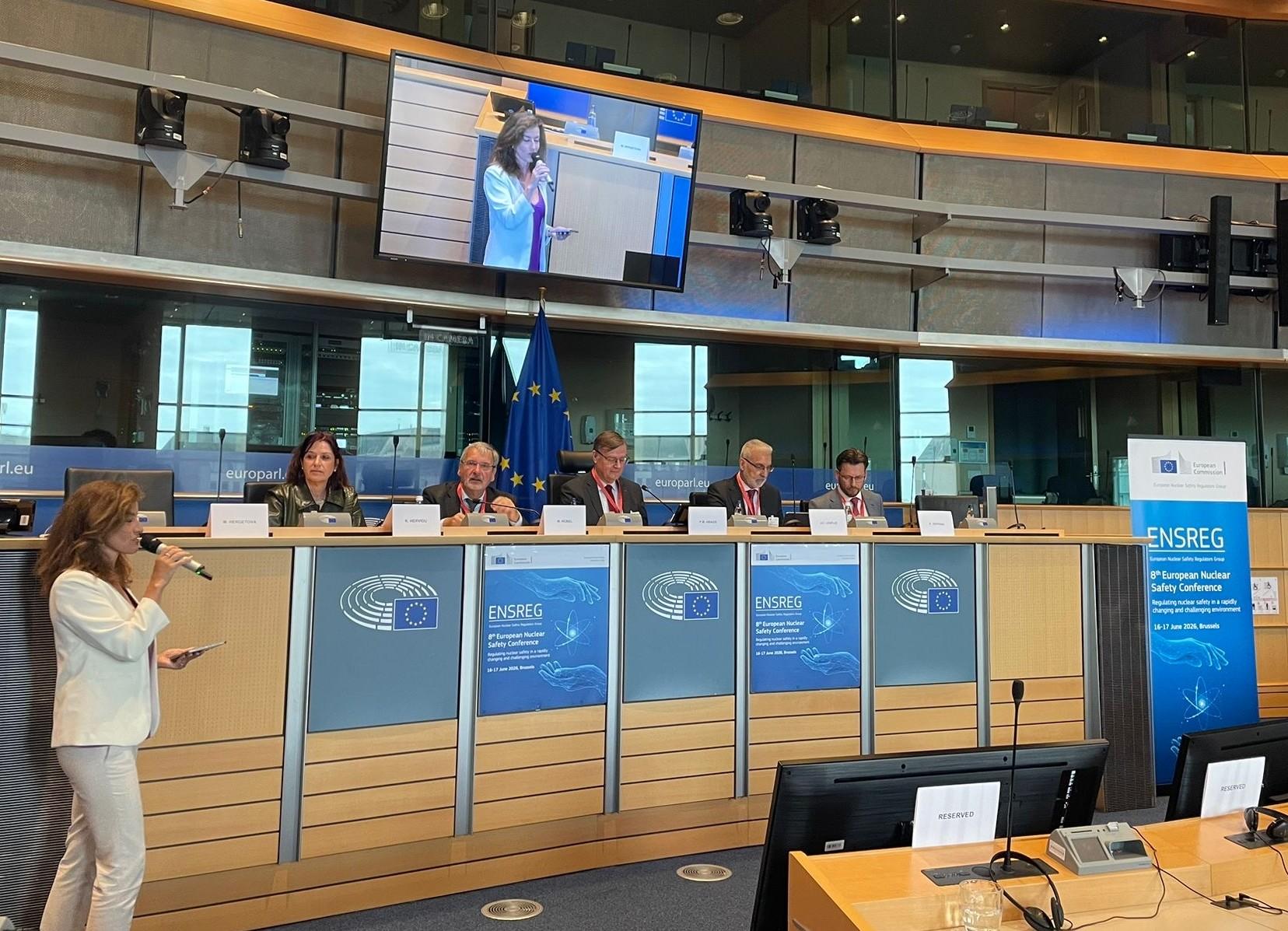
Opening session of the 8th ENSREG Conference. From left to right: Michala Hergetova (moderator), Karine Herviou (Deputy Director-General, International Atomic Energy Agency), Michael Hübel (Acting Deputy Director-General, Directorate-General for Energy, European Commission), Pierre-Marie Abadie (Conference President, Chairman ASNR), Juan-Carlos Lentijo (Chair of ENSREG, President of the Spanish Nuclear Safety Council CSN), Petteri Tiippana (Chair of WENRA, Director General of the Radiation and Nuclear Safety Authority STUK)
Nuclear safety open to innovation and dialogue
The conference confirmed the importance of furthering regulator skills to support the development of disruptive technologies, such as artificial intelligence, to maintain close relationships with international organisations, such as the IAEA or NEA, and to contribute to overall industrial performance. Safety was reaffirmed as a common good to be preserved, not a hurdle to innovation or the efficiency of industrial projects. The independence of authorities, which is essential, does not mean isolation. Regulators must be able to interact with the industry, other regulators, and stakeholders.
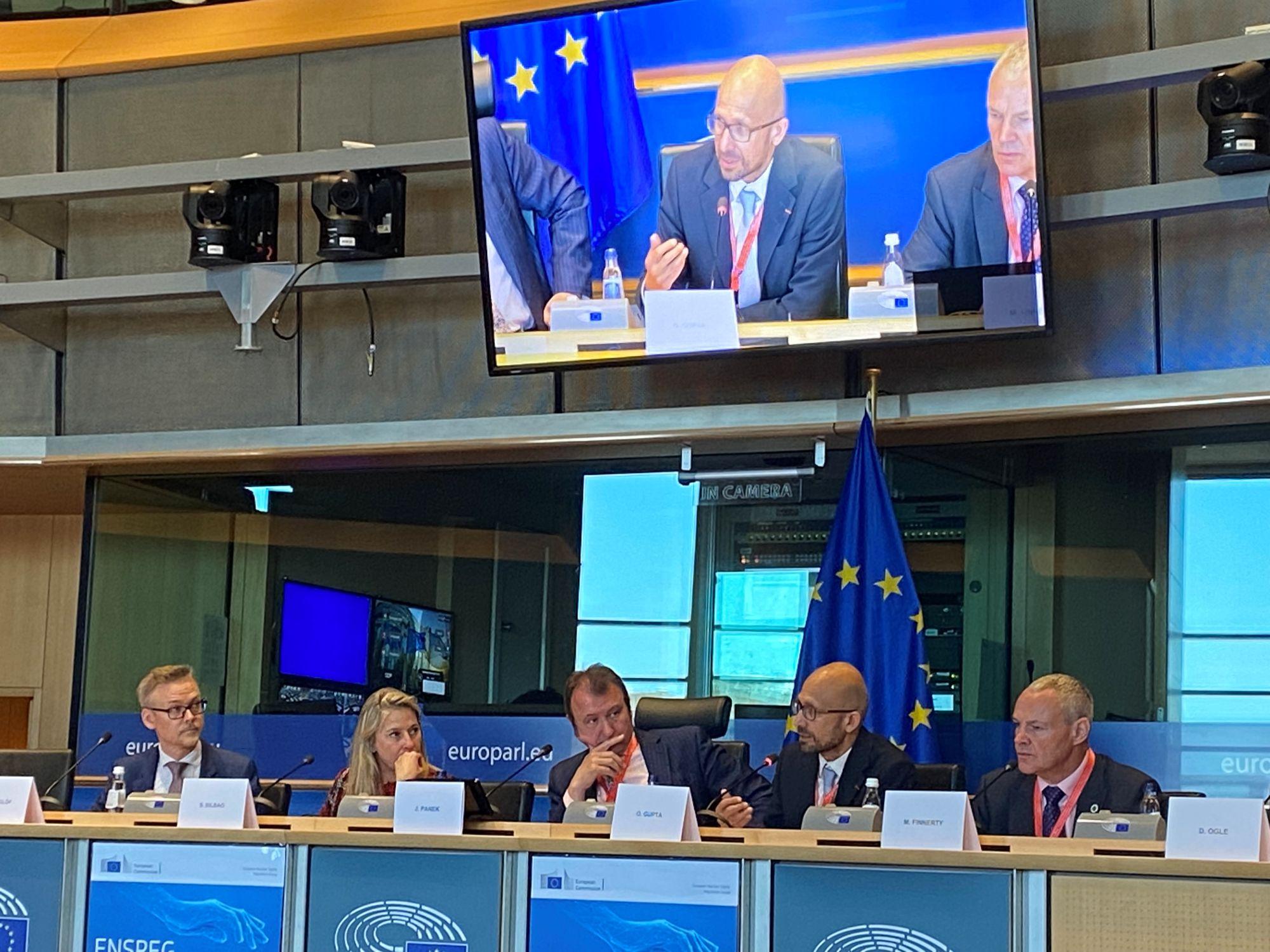
Intervention of Olivier Gupta, Director-General of ASNR and Vice-President of WENRA, during Session 1.
Better upstream dialogue to reinforce safety
While the role of authorities in the current context of nuclear renewal was discussed, with a strong expectation for stable, proportionate, and predictable regulation, the conference served as a reminder that a lack of stability or the complexity of certain industrial projects were not conducive to safety. The utility of the industry and safety authorities communicating far in advance to integrate safety requirements at an early stage of project industrial development was recognised by all. Similarly, the conference highlighted the fact that the current challenge is not to reduce regulatory requirements, but to clarify respective expectations.
Expertise and research: pillars of nuclear safety and radiation protection
There was broad consensus on the need for safety authorities to rely on strong research and to work closely with experts. The need for research programmes conducted within the various institutes or international organisations to be coordinated and guided by a goal of supporting nuclear safety authorities was also reaffirmed, as well as the need for research to be more responsive and conducted with a view to the practical implementation of its results.
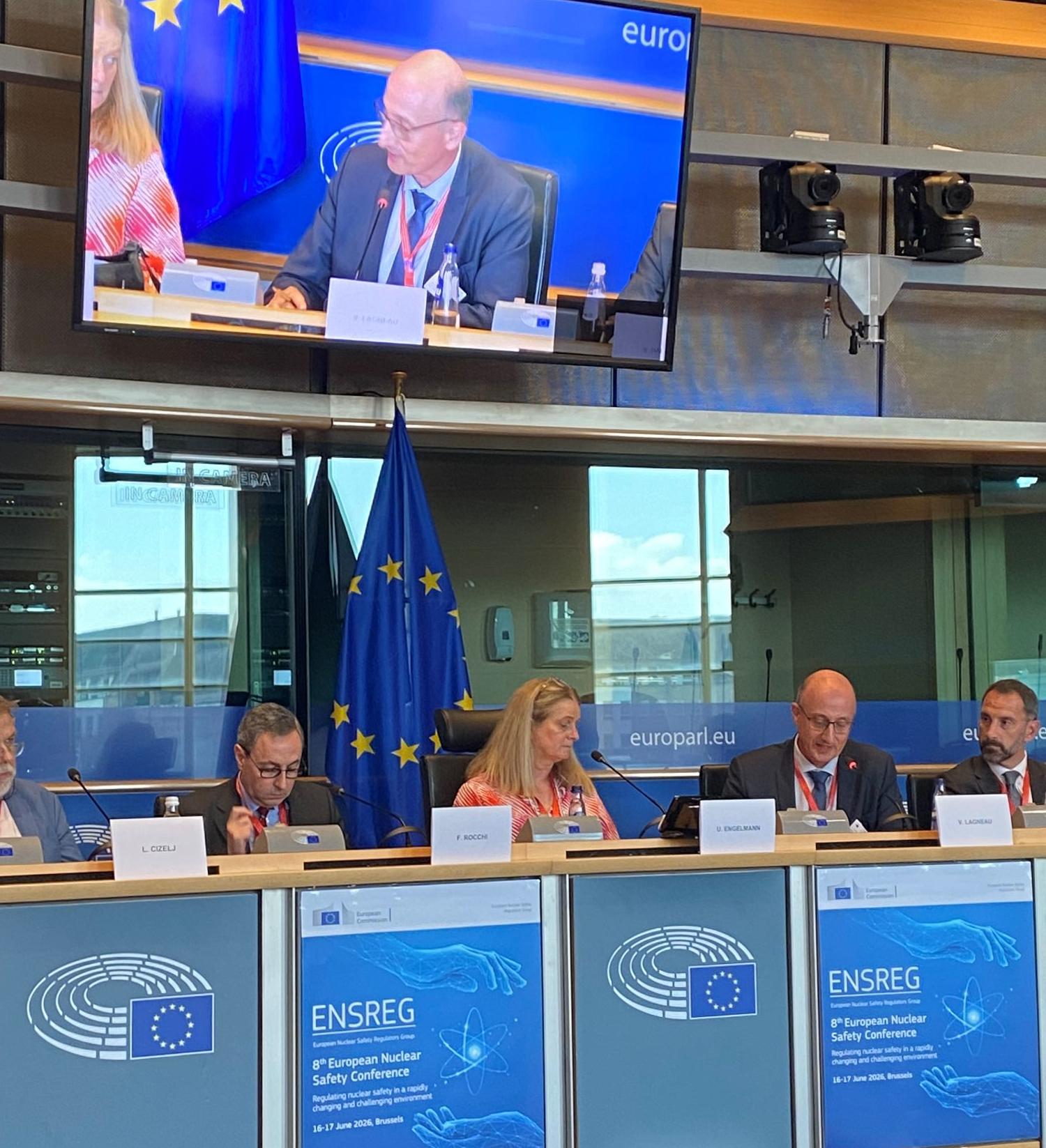
Intervention of Vincent Lagneau, Scientific Director of ASNR, during Session 2.
Strengthen preparedness and international cooperation to cope with crises
The war in Ukraine was widely discussed at this conference. In particular, it was noted that this conflict has profoundly altered the assumptions on which nuclear safety and security are based, which assume nuclear facilities are never subject to military attack. The challenge of balancing the preservation of nuclear safety and security on the one hand, and maintaining supply of electricity on the other, was raised and requires preparation, including legal preparation, starting in times of peace. The importance of strengthening international cooperation and coordination, particularly at the level of nuclear safety and radiation protection authorities, was widely promoted, as was the need to implement proactive peacetime preparedness measures, to have structured decision-making frameworks, and to further evolve legal and regulatory arrangements in order to reconcile nuclear safety considerations with broader societal needs.
Public trust at the heart of nuclear safety and radiation protection
The competence of nuclear safety authorities, their independence, their ability to share and explain were cited as key factors in preserving and strengthening populations’ trust in nuclear safety and its oversight. The conference highlighted that societal engagement, through active and continuous dialogue with the public and stakeholders, fosters the confidence that populations can have in the decisions of authorities. Transparency, in particular allowing access to clear, up-to-date and understandable information, was also highlighted at this conference, and the particular case of cross-border exchanges of information between nuclear regulatory authorities from geographically close countries was discussed. NGO representatives called for greater openness, easier access to information, and stronger safeguards to ensure regulatory positions are not influenced by industry interests or pressure groups.
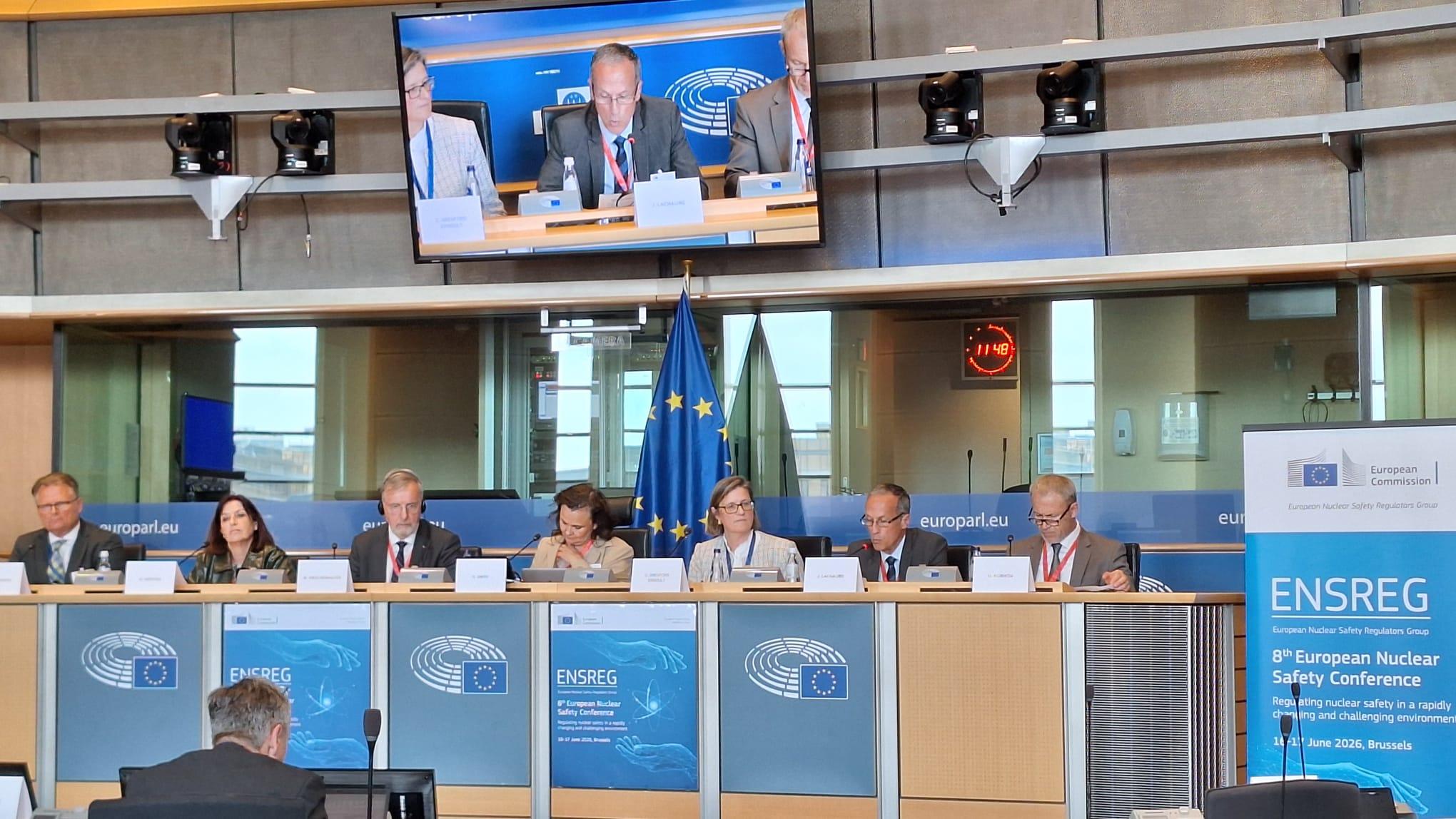
Intervention of Jean-Luc Lachaume, Commissioner of ASNR and Chair of HERCA, during Session 3.
The collective challenges for all actors in the nuclear safety and radiation protection ecosystem
In his conclusion, Mr Abadie acknowledged the mobilisation of safety authorities to meet these new challenges, and called on all actors in this ecosystem - regulators, experts, industrialists, civil society - to defend and preserve the nuclear safety ecosystem. He also highlighted five major collective challenges for all actors in the nuclear safety and radiation protection ecosystem:
- The first challenge concerns the construction of new reactors, a complex industrial issue that goes beyond questions of design alone. Nuclear safety must be integrated into all stages of projects, from design to construction and supply chain management. The safety authorities must support these projects by clarifying, at the right time with regard to the major milestones of the project, their safety requirements and by developing their own technical, organisational, and managerial skills.
- The second challenge is standardisation. While regulatory convergence already exists largely in Europe thanks to the work of WENRA, it will inevitably have limits with regard to local specificities. The main challenge lies in industry standardisation of construction design and methods to promote replication, quality, and safety. Cooperation initiatives between authorities, experts, and project sponsors contribute to this objective.
- The third challenge is to build a graded and proportionate approach to safety, which involves an in-depth technical dialogue and a collegial approach to prioritising safety issues with respect to one another.
- The fourth challenge highlights the importance of research and scientific expertise to reduce uncertainties, develop new assessment methods and support credible decisions, which requires sustainable, national, and European funding.
- Finally, the fifth challenge is that of organisational agility. The recent crises have shown the need, but also the ability of our organisations to adapt quickly while preserving the rigour, transparency, and robustness of processes.
Mr Abadie concluded by highlighting the major asset of the European dimension in meeting the current challenges. He recalled that, beyond national differences, European countries shared common values (independence, transparency, dialogue, and science-based decisions) and benefited from the diversity of their expertise. Through a culture of cooperation and joint initiatives, Member States have demonstrated their ability to pool their expertise, build consensus positions, and give Europe a voice in sustainably strengthening nuclear safety and radiation protection.
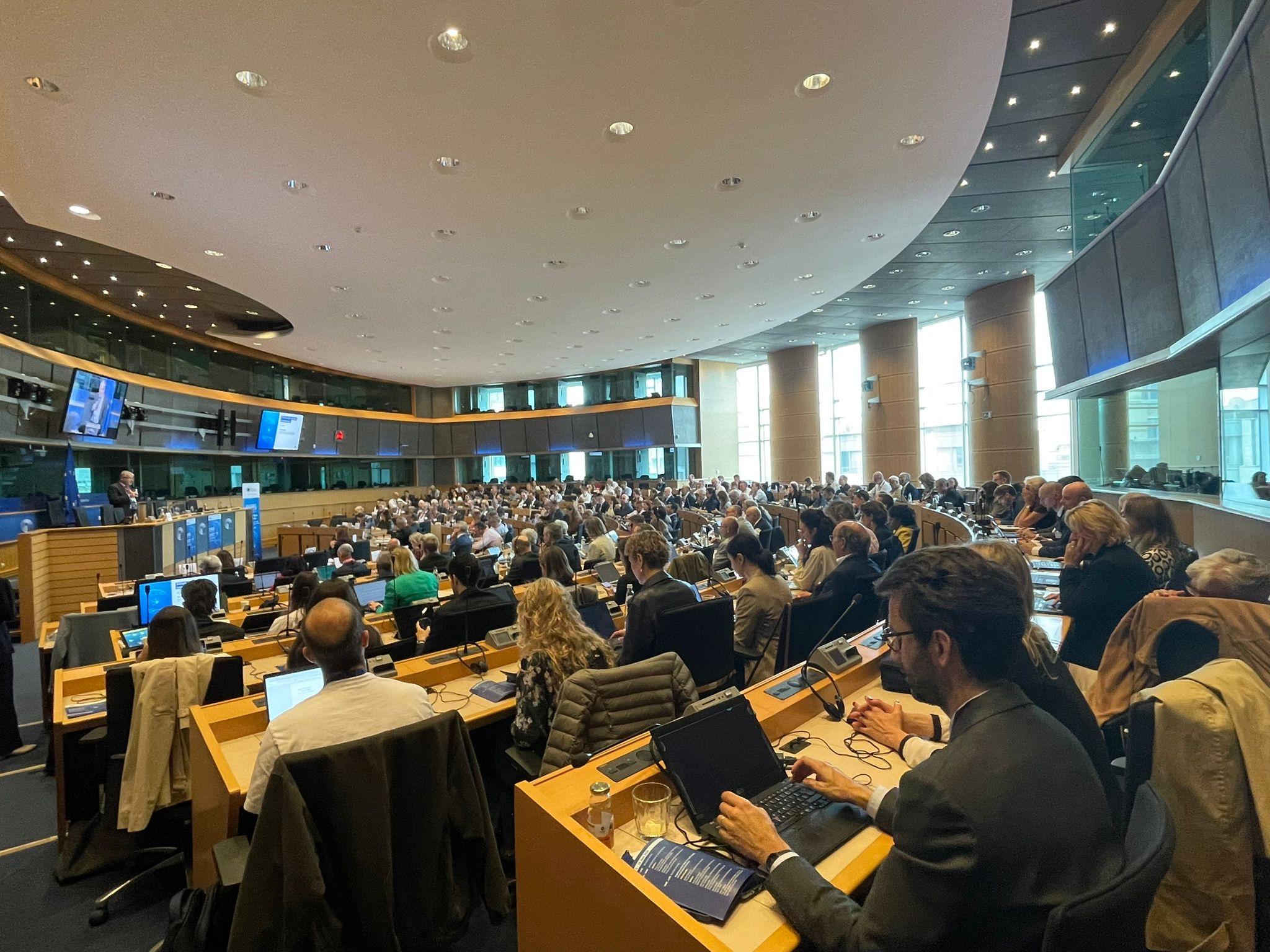
More than 230 participants attended in person the Conference.
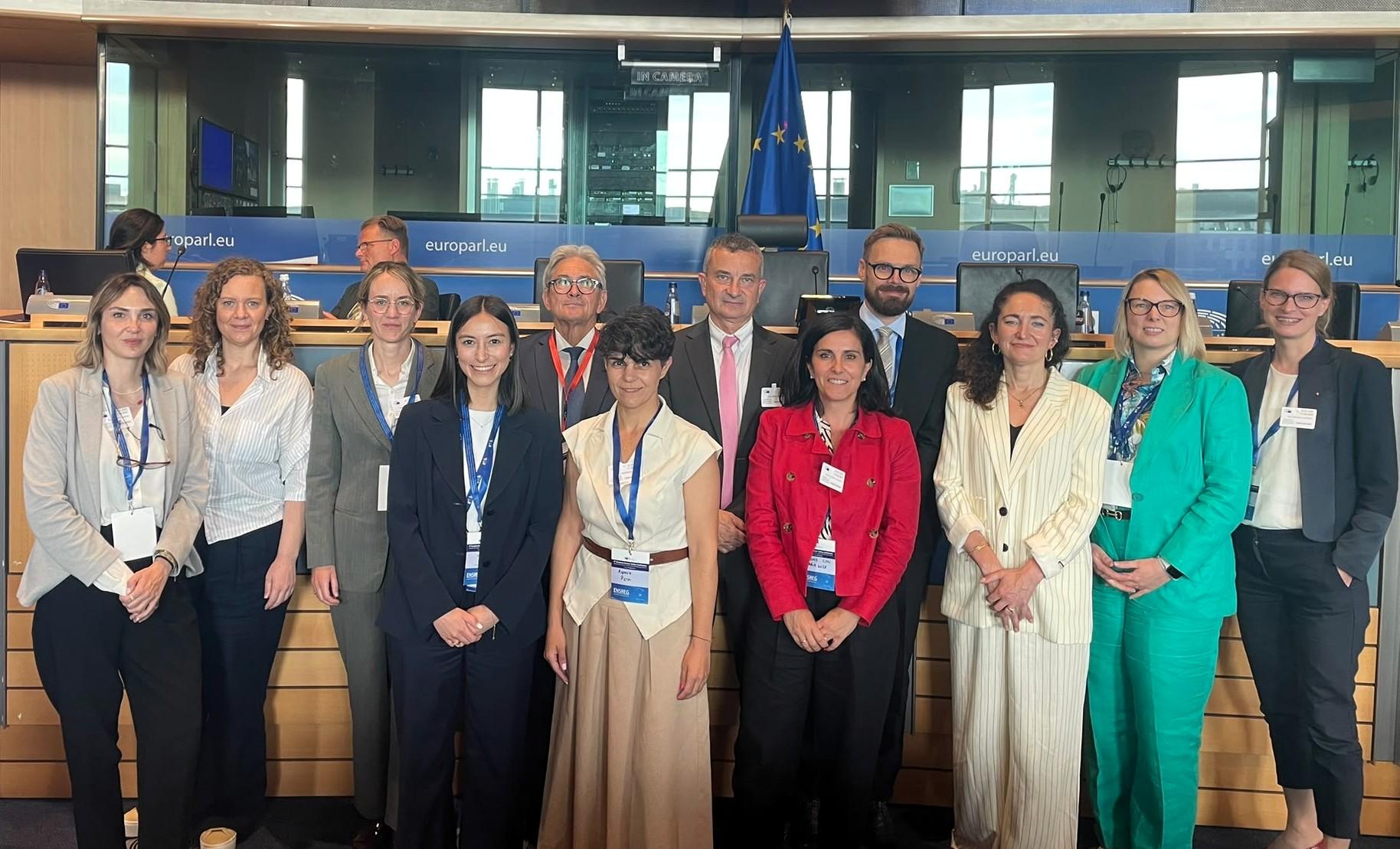
The 8th ENSREG Conference organising committee.