ASNR Report on the state of nuclear safety and radiation protection in France in 2025
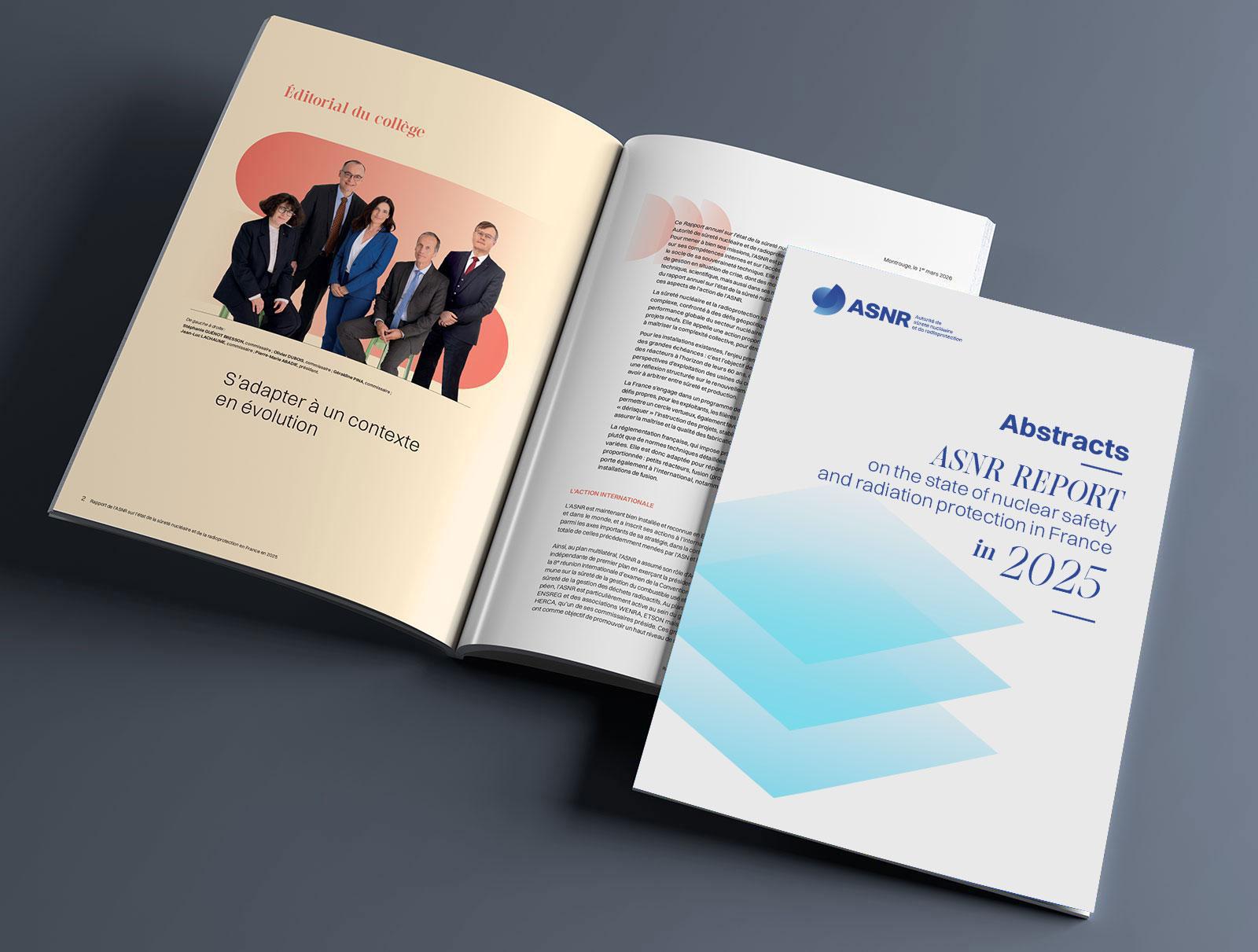
The French Authority for Nuclear Safety and Radiation Protection presents its report on the state of nuclear safety and radiation protection in France in 2025.
This report is required by Article L. 592-31 of the Environment Code.
It was submitted to the President of the Republic, the Prime Minister and the Presidents of the Senate and the National Assembly and transmitted to the Parliamentary Office for the Evaluation of Scientific and Technological Choices, pursuant to the above-mentioned Article.
Adapting to a changing environment
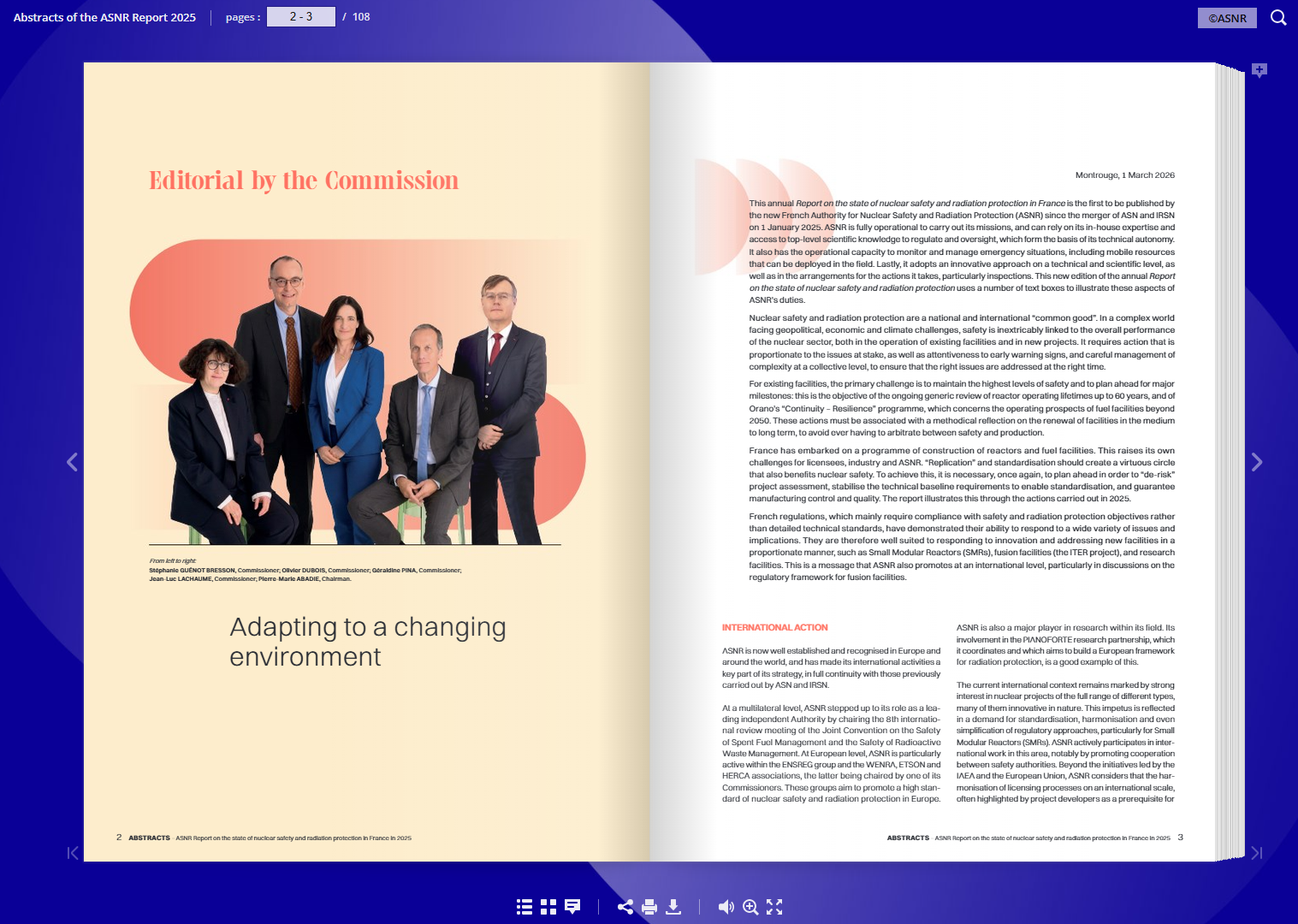
This annual Report on the state of nuclear safety and radiation protection in France is the first to be published by the new French Authority for Nuclear Safety and Radiation Protection (ASNR) since the merger of ASN and IRSN on 1 January 2025. ASNR is fully operational to carry out its missions, and can rely on its in-house expertise and access to top-level scientific knowledge to regulate and oversight, which form the basis of its technical autonomy. It also has the operational capacity to monitor and manage emergency situations, including mobile resources that can be deployed in the field. Lastly, it adopts an innovative approach on a technical and scientific level, as well as in the arrangements for the actions it takes, particularly inspections. This new edition of the annual Report on the state of nuclear safety and radiation protection uses a number of text boxes to illustrate these aspects of ASNR’s duties.
Nuclear safety and radiation protection are a national and international “common good”. In a complex world facing geopolitical, economic and climate challenges, safety is inextricably linked to the overall performance of the nuclear sector, both in the operation of existing facilities and in new projects. It requires action that is proportionate to the issues at stake, as well as attentiveness to early warning signs, and careful management of complexity at a collective level, to ensure that the right issues are addressed at the right time.
For existing facilities, the primary challenge is to maintain the highest levels of safety and to plan ahead for major milestones: this is the objective of the ongoing generic review of reactor operating lifetimes up to 60 years, and of Orano’s “Continuity – Resilience” programme, which concerns the operating prospects of fuel facilities beyond 2050. These actions must be associated with a methodical reflection on the renewal of facilities in the medium to long term, to avoid ever having to arbitrate between safety and production.
France has embarked on a programme of construction of reactors and fuel facilities. This raises its own challenges for licensees, industry and ASNR. “Replication” and standardisation should create a virtuous circle that also benefits nuclear safety. To achieve this, it is necessary, once again, to plan ahead in order to “de-risk” project assessment, stabilise the technical baseline requirements to enable standardisation, and guarantee manufacturing control and quality. The report illustrates this through the actions carried out in 2025.

French regulations, which mainly require compliance with safety and radiation protection objectives rather than detailed technical standards, have demonstrated their ability to respond to a wide variety of issues and implications. They are therefore well suited to responding to innovation and addressing new facilities in a proportionate manner, such as Small Modular Reactors (SMRs), fusion facilities (the ITER project), and research facilities. This is a message that ASNR also promotes at an international level, particularly in discussions on the regulatory framework for fusion facilities.