ASNR at the 19th European Nuclear Energy Forum
Pierre-Marie Abadie, President of ASNR, took part in the 19th European Nuclear Energy Forum (ENEF), which took place in Prague (Czech Republic) on 12 and 13 October 2026.
The European nuclear sector is undergoing a profound transformation: the construction of new reactors, the development of new reactor technologies (SMRs, new concepts and applications), the rise of artificial intelligence and digital tools… All these developments call on all European stakeholders (national and European institutional representatives, regulators, industry, representatives from research and academia, and civil society) to adapt their approaches, skills and practices to ensure the highest standards of nuclear safety.
This topic was at the heart of the discussions organised by the European Nuclear Energy Forum (ENEF), which held its 19th edition in Prague on 12 and 13 October 2026.
Pierre-Marie Abadie, President of ASNR, spoke during the session dedicated to the policy framework for strengthening industrial competitiveness and promoting the development of nuclear projects. In particular, he highlighted several European challenges facing industry and regulators:
1. Safety and radiation protection: a ‘common good’ and a prerequisite for sustainable and safe development for the public and the environment.
2. Safety: a key factor in the overall performance of the nuclear industry, rather than an obstacle.
Nuclear projects are long-term ventures and require a regulatory framework that is stable, predictable and proportionate to the risks, as well as independent authorities. Regulators contribute to this by setting general objectives, without imposing specific solutions, by becoming involved at an early stage in projects and by applying a graded approach. They are transforming themselves accordingly (France, Finland, the United Kingdom, Sweden), without compromising on standards or transparency.
Safety does not rest solely on design: it also, and above all, depends on the maturity of the projects submitted to the regulators, the quality of construction, and the robustness and safety culture of the entire ‘supply chain’. For regulators, examining an insufficiently mature safety demonstration under time or cost pressure is unacceptable: it is first and foremost a matter of safety, but an insufficiently mature design is also a risk to industry, with impacts on both the project timelines and financing.
3. Promoting the standardisation of designs and project execution in Europe.
In a period of new construction, replication is beneficial for quality and safety. It is therefore a matter of concern for safety authorities.
Although Europe benefits from general safety objectives and frameworks for harmonisation and cooperation such as WENRA, ENSREG and ETSON, far-reaching regulatory harmonisation will always have its limits, and harmonisation introduced too early may also stifle innovation. It is indeed industrial standardisation, driven by project promoters, that can contribute to replicability and improve quality, safety and industrial performance through designs that are more modular and resilient to varied configurations.
Regulators support this through technical cooperation via ENSREG, WENRA and ETSON and through the implementation of European initiatives, such as the Joint Early Reviews (JERs). However, this requires in-depth technical dialogue between industry and safety authorities, as early as possible in the project lifecycle, to share best practice and identify key safety issues, while respecting each party’s responsibilities and national specificities. The diversity of approaches, which is one of the strengths of the European ecosystem, must therefore be protected collectively.
4. Aiming for more efficient regulation, not simply faster regulation.
The nuclear regulatory procedures are rarely on the critical path of construction projects: the difficulties encountered worldwide in major nuclear projects stem mainly from insufficiently mature designs, deficient project management and weaknesses in the supply chain. Improving efficiency means anticipating safety issues and focusing on the key issues at the right time, in line with the milestones of the industrial programme: a graded approach is not something one proclaims; it is built through technical dialogue.
Regulators also know how to be agile by adapting their processes to the nature of the projects: research facilities such as ITER, mature high-power reactors to be replicated, or small modular reactors still under development. The aim is not less safety, but better safety.
Pierre-Marie Abadie concluded his address by pointing out that the diversity of national approaches to nuclear safety and radiation protection can be a strength, provided it is harnessed to serve a common ambition. European networks, such as WENRA, HERCA and ETSON, are essential to developing this collective vision and preparing for the deployment of tomorrow’s reactors. In a rapidly evolving sector, European cooperation is more essential than ever to jointly address today’s challenges and anticipate those of tomorrow.
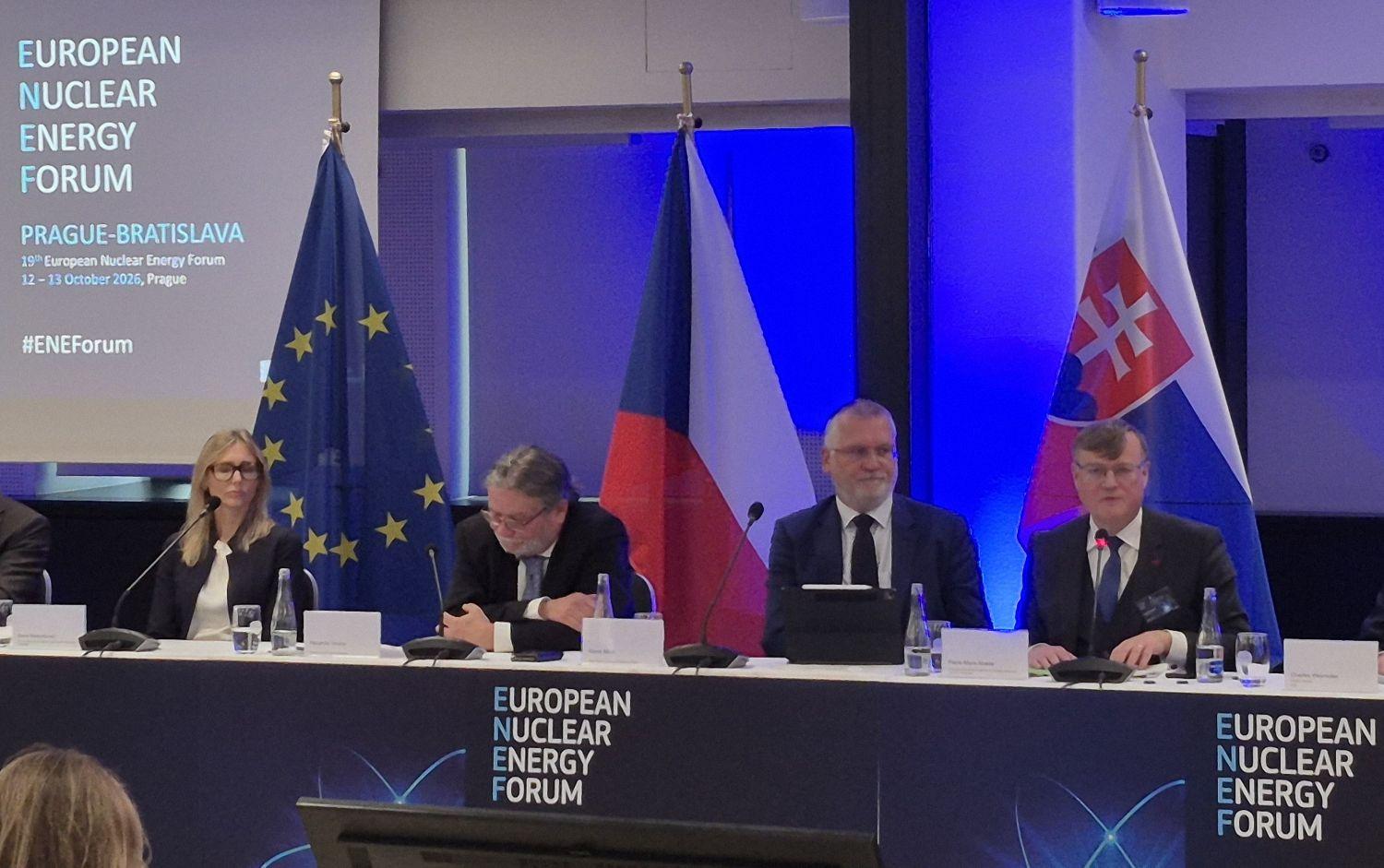
Address by Pierre-Marie Abadie (on the right).
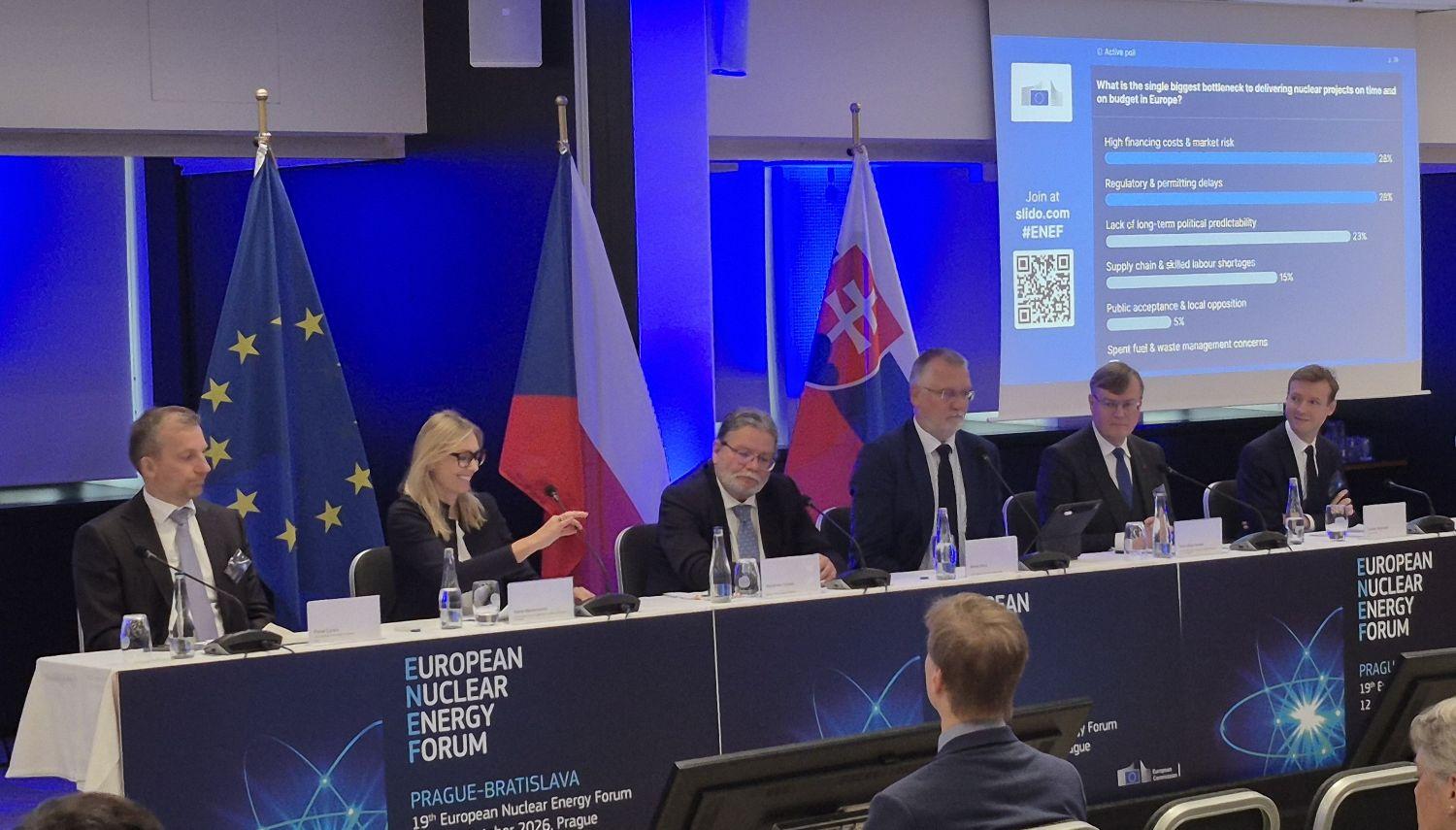
From left to right: Pavel Cyrani (Vice-Chairman of the Board of Directors, ČEZ), Alena Mastantuono (Vice-President of the European and Economic and Social Committee), Alexander Vondra (Member of the European Parliament), Marek Mora (Vice-President, European Investment Bank), Pierre-Marie Abadie (Chairman of the French Authority for Nuclear Safety and Radiation Protection), Charles Weymuller (Chief Economist, EDF).