Olivier Gupta invited at the 20th anniversary of ENISS and at the annual seminar of NuclearEurope
On 2 December 2025, Olivier Gupta, in his capacity as Vice-President of WENRA (the European Nuclear Safety Regulators' Association) and Director General of ASNR, was invited to speak at an event marking the 20th anniversary of the creation of ENISS, the European Nuclear Installations Safety Standards Initiative that, and the annual seminar of NuclearEurope, the association for the nuclear energy industry in Europe.
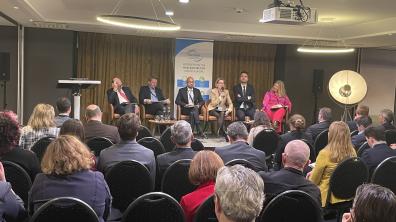
During an initial meeting with ENISS, several topics were identified that warrant further discussion between WENRA and ENISS, such as the continued operation of existing reactors, the definition of safety objectives for new reactors, and the harmonisation of safety regulations and assessment processes. The issue of recognition between nuclear safety authorities of assessments conducted by one of them was also discussed.
This event was followed by the annual NuclearEurope seminar.
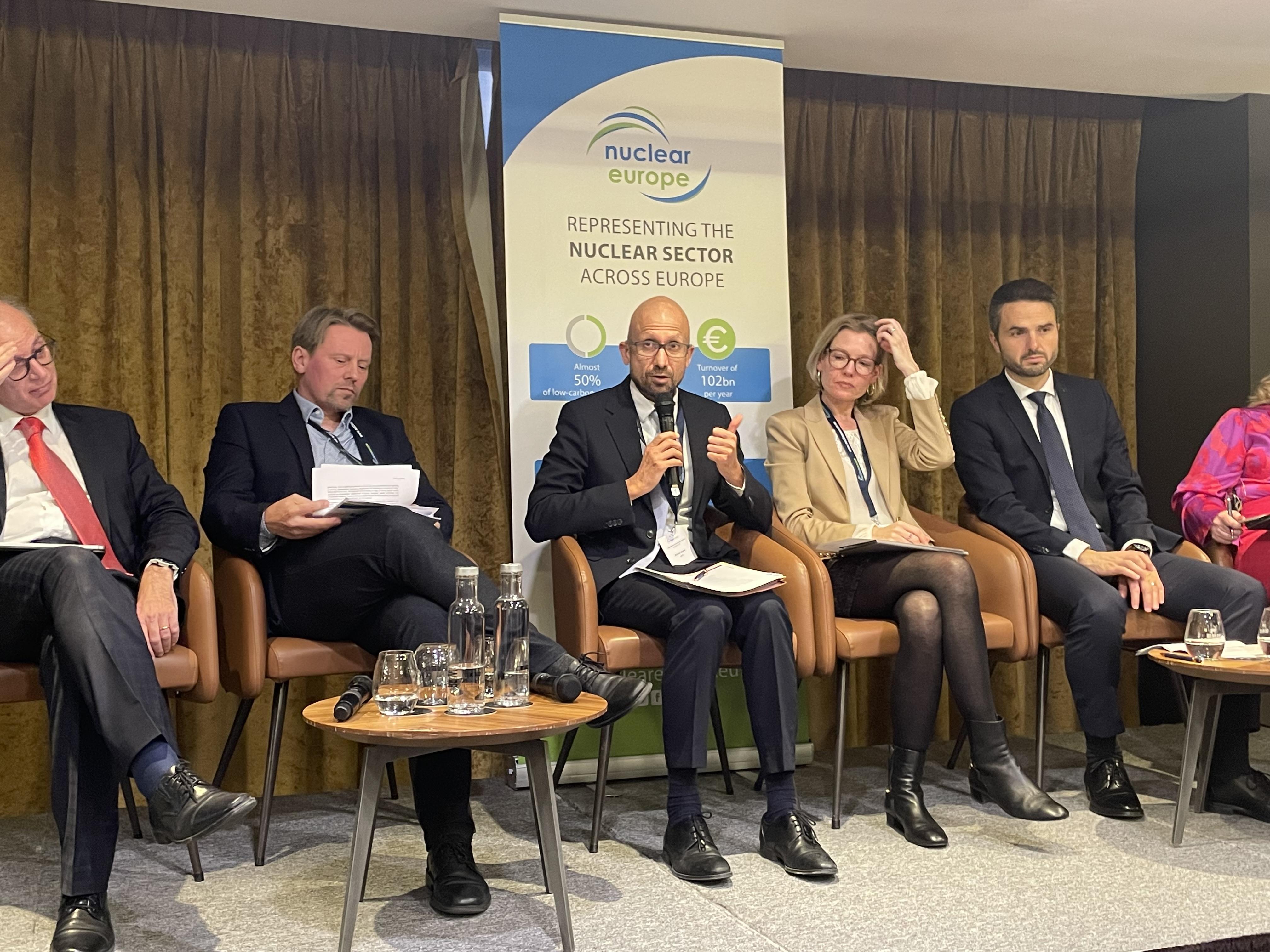
As part of a panel that included the European Commission's Deputy Director-General for Energy and a Member of the European Parliament, Olivier Gupta shared the vision of European safety authorities in the current context of the nuclear industry's revival.
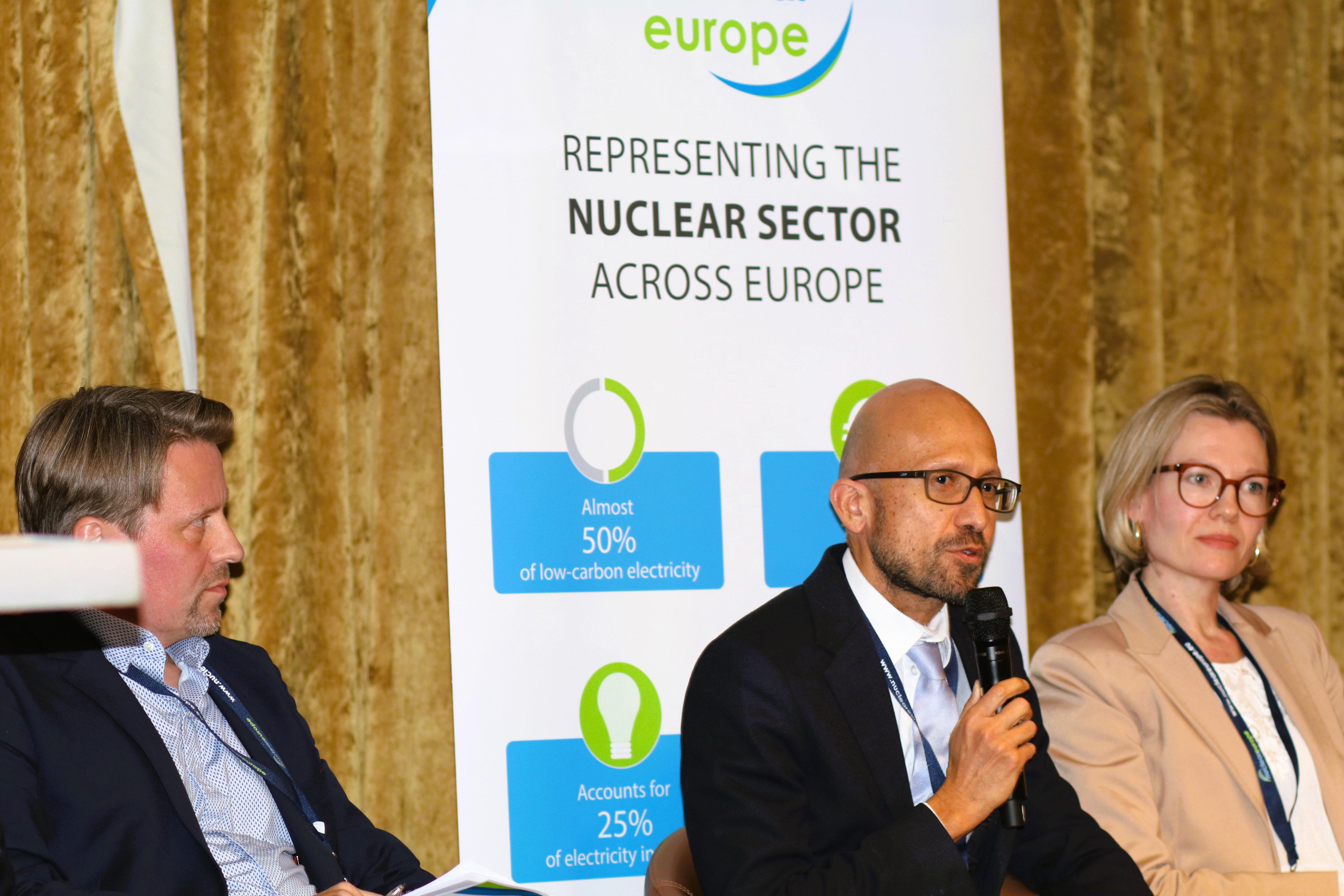
He reiterated that the statement made by WENRA in 2022 remained fully relevant. WENRA called on governments to provide clear and stable guidance on energy policy, as a long-term vision is conducive to both industrial control and safety. WENRA also called on the various stakeholders to preserve the primary responsibility of operators for nuclear safety and the independence of safety authorities.
Referring to the difficulties faced by the sector in carrying out long and complex projects, he mentioned the need for the industry to have the necessary skills, to be able to rely on a robust supply chain, to only undertake construction projects when designs are sufficiently mature, and to strengthen the standardisation of reactor models.
Olivier Gupta also emphasised the safety authorities' desire to adapt regulatory processes to the life cycles of facilities, in particular by initiating discussions with project designers at a very early stage of the development of new reactor models, stabilising technical safety standards and strengthening the implementation of a graduated approach proportionate to the risk.
He finally pointed out that nuclear safety, industrial performance and efficiency are not mutually exclusive but reinforce each other.